.png?width=774&height=812&name=Master%20final%201%20(1).png)


Kavita Kurup
Senior Vice President and Chief People Officer, Cyient
Everyone is talking about building a “future-ready workforce”. Far fewer are asking a more uncomfortable question: future-ready for what, exactly?
As artificial and technological intelligence become increasingly central to how teams operate, “future readiness” is often being reduced to adopting more technologies, faster. It becomes shorthand for uprooting long-established processes and belief systems in favor of the most advanced technologies.
However, technology is only one piece of the puzzle. What’s getting lost in the conversation is something far more foundational: how organizations are equipping and empowering their people to evolve with them.
This takes a more holistic approach to intelligence that leverages AI and technology not as a replacement for human capability, but as an amplifier, grounded in the real-world experiences and ambitions of every employee.
Why Transformation Alone is Not Enough
Traditionally, AI has been framed around efficiency. Faster processes, lower costs. It is bolted on with big promises of transformation, with the assumption that change in and of itself is progress. But this rarely translates into impact.
Progress only matters when it holds real-world value. In the context of people and culture, that means improving employee experience, strengthening culture, improving talent attraction and retention, and enabling purposeful growth for both individuals and the organization. When technological and artificial intelligence are disconnected from those outcomes, they lose credibility.
This is where the idea of intelligence needs to be reframed. It’s not something organizations deploy onto people, but something they must enable within them.
AI will inevitably shape the future of work. The real question is whether it becomes a tool for cost efficiency or human capability.
Intelligence that Amplifies Human Capability
At Cyient, we describe this as Embracing Intelligence. From a people and culture perspective, it means avoiding the trend of adopting an “AI-first” posture and instead focusing on the cultural and structural foundations that help both employees and the business evolve, adapt, and succeed. AI plays a critical role in that, but it’s not the hero of the story. The people are.
Engineering teams have often approached AI as a technology layer. But the real opportunity lies in integrating it with human judgment, emotional intelligence, and domain expertise. That’s when it comes through in how employees think, interact, progress, and deliver tangible business outcomes.
When intelligence is embraced in this way, the impact can be felt across all areas of the business. Talent attraction improves because people want to work in environments where learning is championed. Retention strengthens because careers feel extended instead of constrained. Culture becomes resilient and adaptable because progress feels continuous instead of episodic.
At its core, Embracing Intelligence rests on three principles: choice, transparency, and consequence. Because adaptation cannot be forced, careers cannot evolve in the dark, and growth must always translate into real opportunity.
Embedding Intelligence into Company Culture
For people and culture, Embracing Intelligence is only credible when it shows up in real systems, behaviors and expectations. In practice, that looks like:
- AI-enabled career pathways: AI is used to extend careers and open new development pathways. With intelligence embedded, organizations can map adjacent roles and skills, so employees have the visibility needed to decide where they go next.
- Preparing for future skills: In engineering-focused industries, skills drift in and out of relevance, and while education provides entry, it doesn’t guarantee longevity. When we embrace a holistic approach to intelligence, we can surface future skills relevance early, so employees can act proactively instead of waiting for skills redundancy.
- Empowering employee agency: Adaptation cannot be mandated. Embracing Intelligence requires a level of transparency and accountability that allows employees to opt in to skills development, AI enablement, and reinvention on their own terms.
- Leadership role-modeling: Embracing Intelligence is a cultural mindset, not a slogan or a technology approach. When senior leaders visibly invest in their own learning, normalize evolution, and reward adaptability, it trickles through the entire business.
Intelligence must be embedded into how the organization works, not bolted on as a technology initiative. Time saved through automation only matters if it is reinvested into judgment, learning and meaningful contribution.
How We’re Building a Culture on Meaningful Growth
At Cyient, we recognize that AI is rewriting the future for a lot of industries. And while that brings new opportunities, it also brings an inevitable level of uncertainty. How employees work and develop is changing, with technology increasingly playing a starring role in their journeys.
What makes the biggest difference is how that technology is integrated without displacing or disrupting what matters most: your people.
Cyient’s strength lies in balancing heritage with meaningful progress. We are human-first and AI-empowered. Our deep engineering rigor, long-tenured expertise and sustained employee loyalty coexist with an equally clear recognition that evolution is necessary, and relevance must be continuously renewed. Reinvention has always been part of our DNA, but only when it makes a purposeful difference.
This creates a culture where intelligence is exercised and debated openly. Where pride in engineering excellence sits alongside a willingness to learn again. And where our people understand that relevance is something they actively build—with Cyient enabling, not prescribing, the path forward.
Human-First, Amplified with Intelligence
The future of work is not AI-first. It is people-first, just as it always has been. But when we integrate AI in a purposeful way, it impacts more than just efficiency. Career pathways become visible, learning becomes continuous, and reinvention becomes standard instead of exceptional.
This is what Embracing Intelligence means for people and culture. It is recognizing that AI alone can only do so much, but when combined with emotional and human intelligence, it comes through in how we show up, how we grow, and how we deliver work to our clients.
And that, ultimately, is what a “future-ready workforce” should mean: being able to lead, learn, and deliver with confidence, clarity, and purpose.
Leading the AI-Powered Evolution in Healthcare
At Cyient, we’re helping healthcare and life sciences organizations move from digital to intelligent, where AI amplifies human ingenuity and engineering precision. By combining deep domain expertise with advanced technology and data science, we turn algorithms into insights, and insights into measurable impact.
This is how being Domain-First, Tech-Driven, and AI-Infused creates enduring differentiation.
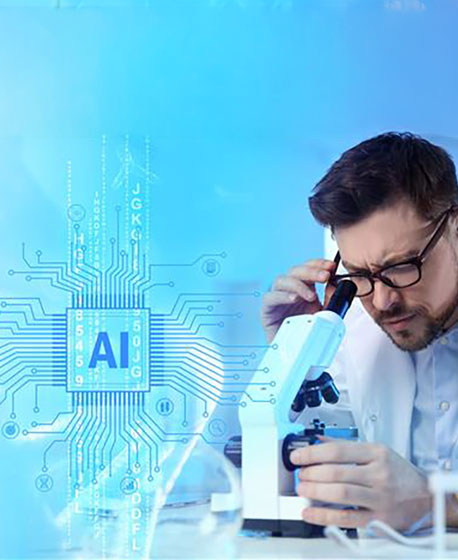
AI-Driven
Product Design
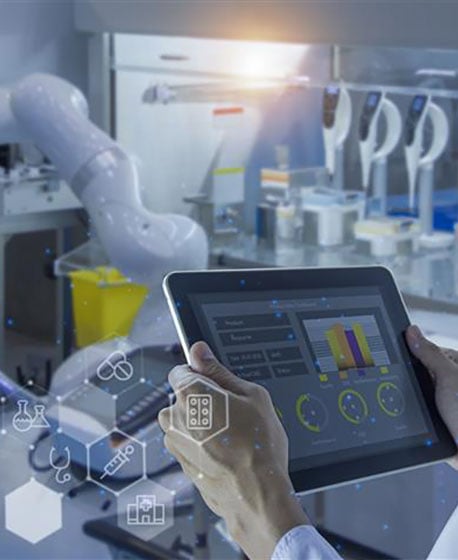
Smart
Manufacturing

Connected
Health Ecosystems

Regulatory &
Quality Intelligence