

Overview
Operators that have rolled out, transformed, and vendor-swapped large-scale broadband networks have found that zero-touch automation in the “plan, build, and operate cycle” is not only necessary, but provides tremendous financial and operational advantages. The pace of 5G and fiber rollouts is increasing as demand, incentives, and investments for broadband connections continue to rise. With funding in place, whether public or private, operators are on the clock to bring new 5G and fiber network infrastructure online and to generate revenue rapidly and efficiently. Deploying network equipment fast is not enough; modern networks are expected to perform, to share resources with multiple customers, to utilize automation, to self-heal in many instances, and to evolve toward autonomous operations. Applying zero-touch automation up front, in the plan, build, operate cycle, is now proving advantageous for operators in delivering better performing and more automated networks faster and with less cost.
Broadband Keeps Growing
Omdia and 5G Americas report global 5G connections have reached nearly 2 billion total after adding 185 million in the first quarter of 2024. At the same time, many governments are subsidizing new network builds. In the U.S., for example, states have been distributing federal broadband grant funds to build new fiberoptic networks, including $374 million in Oklahoma, $247 million in Florida, and $45 million in Massachusetts. Similarly, private equity firms continue to fund, invest in, and consolidate telecom providers, bringing added capital to meet the growing demand for mobile and fixed broadband infrastructure.
Operators face rollout pressure
With this influx of investment, many operators are under pressure to roll out networks rapidly and to begin generating revenue and returns for investors. But the networks they deploy need to be optimized and to adhere to network designs accurately to deliver high quality connectivity on-demand. Satisfying this combination is a real challenge for many network operators particularly in multivendor networks designed for complex and latency sensitive services. Under pressure to upgrade and consolidate networks, operators sometimes struggle to balance infrastructure delivery against long-term quality and cost concerns. As a result, network optimization has been overlooked, and manual errors have been allowed to plague processes and network data stores, increasing costs. To control for these errors and improve metrics like OPEX and time-to-market (TTM) for any and all network rollouts, more operators are finding that an automated network plan, build, and operate cycle provides a solution.
Automating the plan-build-operate cycle
The plan-build-operate cycle is the process a network operator uses to prepare, construct, launch, and run any network it owns, builds, or acquires. This basic example (see Figure 1) provides a modern approach to the plan-build-operate cycle. It utilizes a continuous optimization loop and accounts for new networks, network decommissioning, and vendor swaps.
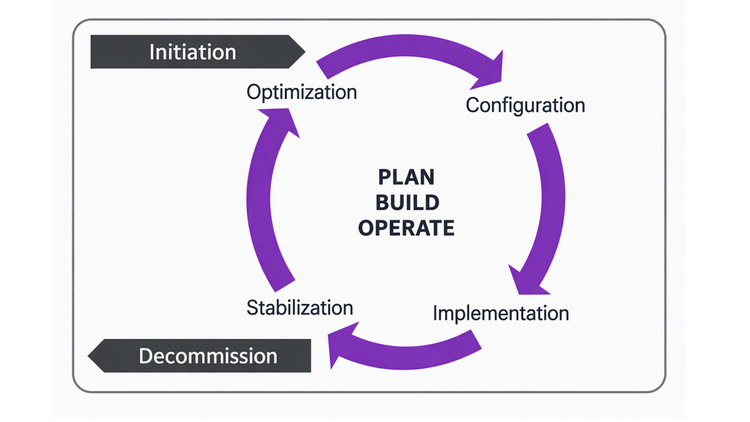
Figure 1 - A basic plan-build-operate cycle for a telecom network including the concept of continuous optimization.
Cyient adds zero-touch automation to the plan-build-operate cycle. Rather than a single loop with on and off ramps, like any DevOps-rooted process, it adds a second loop – for continuous operations that are driven by zero-touch, closed-loop automation (see Figure 2).
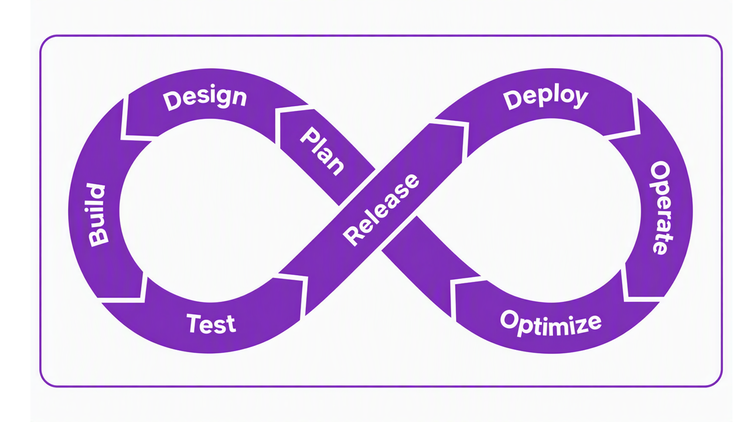
Figure 2 - This automated, closed-loop process accelerates network rollouts by preventing, detecting, and repairing disparities between network designs and live configurations.
With an automated plan-build-operate cycle, data management is the critical capability. Managing network configuration data well is central to a network operator’s ability to implement network configuration changes. Good network configuration data lets the operator ensure implementations comply with designs, that implementations are reflected accurately in network data, and enables automated acceptance of new configurations with the confidence they, too, will be accurate and optimized.
Cyient’s automation approach
Our approach to automating the plan-build-operate cycle utilizes a zero-touch automated process designed to facilitate network rollouts, changes, vendor swaps, decommissioning and a range of other scenarios. Our automation engine drives many of the core activities and milestones that comprise the cycle, such as:
- Creating a master database from all available network data.
- Immediately identifying any inconsistencies or other misconfiguration issues in the network.
- Applying proven, network engineering-based business logic to optimize the network configurations and enforce compliance with designs.
- Resolving any network design and configuration conflicts dynamically with a zero-touch automated and closed-loop process.
Operators that have adopted Cyient’s zero-touch automation approach have benefitted substantially from it in terms of cost, speed, quality, and customer experience, with improvements like:
- 40% reduction in operational costs for new networks
- 60% simplification in network configurations, improving quality and minimizing conflict
- 35% faster root cause troubleshooting for network issues • 50% better service quality for end customers
Achieving Agile Network Rollouts Through Automation Cyient has witnessed various patterns and scenarios because of its deep experience helping operators to automate their network rollouts. The zero-touch automation approach consistently results in faster, better optimized, more accurately configured, higher quality and less costly network rollouts. Here are four clear examples:
Modernize the national network and cut emissions and energy costs
As a national incumbent operator takes on a massive and nationwide broadband network transformation, Cyient is a key strategic partner delivering automation that’s helping the operator transition to new technologies and reach its net-zero emissions goals. The network transition impacts infrastructure, devices, end customers and changeovers need to be delivered with precision. For example, the operator is transitioning from ADSL to broadband - a process that had to be streamlined and automated to control time, cost, effort and customer experience. After analyzing the operator’s transition process, Cyient recommended a range of automation, including those using the operator’s existing robotic process automation (RPA) platform. Manual activities were eliminated from network transition processes; tasks like checking systems for port data or generating validation reports were automated to speed them up and eliminate error. Cyient then automated cutover process validation so that consumers migrate to new devices as device decommissioning takes place without issue. With these automated processes in place, nearly 3000 roadside devices and 2000 PSTN connections were decommissioned, along with thousands of devices ranging from DSLAMs and transit switches to remotes. This reduced energy consumption, in annualized terms, by more than 26,000 megawatt-hours and more than 20,000 tCO2, resulting in cost savings of $5.6 million per year while moving the operator toward zero emissions through zero-touch automation.
Assure multivendor RAN quality by automating inconsistency resolution
In the next instance, an operator was on deadline to deliver a multivendor RAN. The challenge, however, was that the RAN had to meet strict service quality requirements across all regions, regardless of vendor. Cyient applied its zero-touch automated inconsistency correction solution to create a unified RAN view. This view then enabled Cyient to automate a “live-planned” RAN synchronization process which detected inconsistencies between network plans and the live network, reconciling them automatically. By enforcing network designs in the live network, the operator can introduce new network features 95% faster and has standardized SLA compliance across its vendor implementations. The zero-touch, closed-loop process assures SLA-compliant performance while eliminating human error.
Improve multi-vendor performance in a shared RAN
In another case, performance degradations were creating quality of service (QoS) problems for several stakeholders in a shared, multi-vendor RAN environment. Cyient applied a zero-touch automated approach to detect, self-heal, and resolve network problems. Cyient automates anomaly detection based on a robust base of proven pattern detection rules. This is coupled with automated root cause analysis logic to diagnose core problems. Pre-built automations and workflows then enable the network to resolve any detected anomalies in network configurations and thereby self-heal with a zerotouch process. Using this approach, the operator improved time-tomarket for new workflow-based automations by 60%. Even more dramatically, the stakeholders were able to reduce the size of the teams required to operate the shared RAN by up to 70%, while also resolving performance degradations fast and around the clock with a closed-loop process.
Automate large-scale network vendor SWAP
In an increasingly common example, a mobile operator needed to replace its 5G network vendor quickly with its competitor. Cyient was instrumental in this urgent transition, freeing the operator from vendor lock-in and accelerating the network transition. Cyient first provided a live network view that gave visibility into preswap, in-process, and post-swap network equipment installations and configurations. It was a challenge to translate configuration parameters from one vendor’s gear to the other, but Cyient automated this process along with pre and post-network configuration quality checks and acceptance processes. The operator not only succeeded in implementing its new network, but improved network operations. For example, RAN network policies are now governed actively. Invalid network parameters are identified automatically and corrected with dynamic configuration enforcement. Network views are synchronized across a variety of multi-vendor tools the operator uses and SLA compliance has been standardized networkwide, all thanks to zero-touch automation.
Why zero-touch automation is the key to Better network rollouts
Zero-touch automation using closed-loop processes has been an aspiration for operators for years because it offers speed, efficiency, and cost reduction. As these examples show, zero-touch automation can be applied to many of the central activities that make up network rollouts, transformations, and vendor transitions with substantial benefits derived. Taking these processes out of manual mode and fueling them with an accurate view of today, yesterday, and tomorrow’s network eliminates error, adds pace to programs, and cuts expenses.
For a closer look at Cyient’s approach to zero-touch automation please connect with us here.