There are trade shows, and then there is InnoTrans.
For anyone who has spent a meaningful part of their career in the rail industry, InnoTrans is more than an exhibition. It is the heartbeat of global rail innovation. Every two years, the industry gathers in Berlin not merely to showcase products, but to exchange ideas, challenge assumptions, build partnerships, and collectively shape the future of mobility.
The 2026 edition carried special meaning. InnoTrans celebrated 30 years since the event first opened its doors in 1996. Across four remarkable days, the scale of the show was impressive, but the quality of the conversations made the experience unforgettable.
Arriving in Berlin: a sense of energy
The moment you arrive in Berlin during InnoTrans week, you can feel the energy. Rail leaders, operators, OEMs, technology providers, infrastructure specialists, policymakers, and innovators from across the world converge with one common goal: advancing the future of transportation.
Walking into Messe Berlin on the opening morning felt like stepping into a living vision of the industry’s future. Conversations unfolded in many languages, exhibition halls buzzed with activity, and everywhere there was evidence of an industry embracing transformation.
The scale remains extraordinary, but what stood out this year was the pace of change. Artificial intelligence, digital engineering, predictive maintenance, sustainable mobility, resilient supply chains, autonomous operations, and lifecycle optimization were no longer distant concepts. They were real conversations, demonstrations, and investments.
The evolution of the rail industry
Having witnessed the industry’s journey over the years, one observation became increasingly clear: rail is no longer being defined solely by physical assets. It is increasingly being shaped by intelligence.
Trains, signaling systems, infrastructure, maintenance operations, manufacturing facilities, and supply chains are becoming more connected, data-driven, and predictive. Customers are looking beyond how a system is engineered. They want to know how delivery can be accelerated, reliability improved, failures anticipated, lifecycle costs reduced, and passenger experience elevated.
Those questions shaped many of the most valuable discussions at InnoTrans 2026.
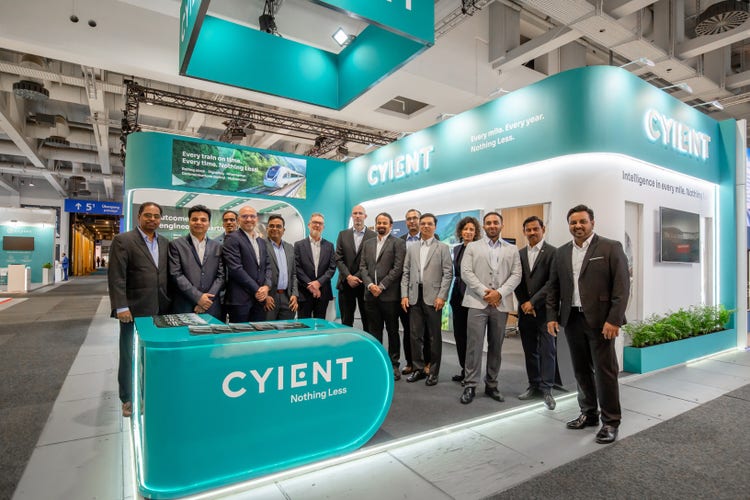
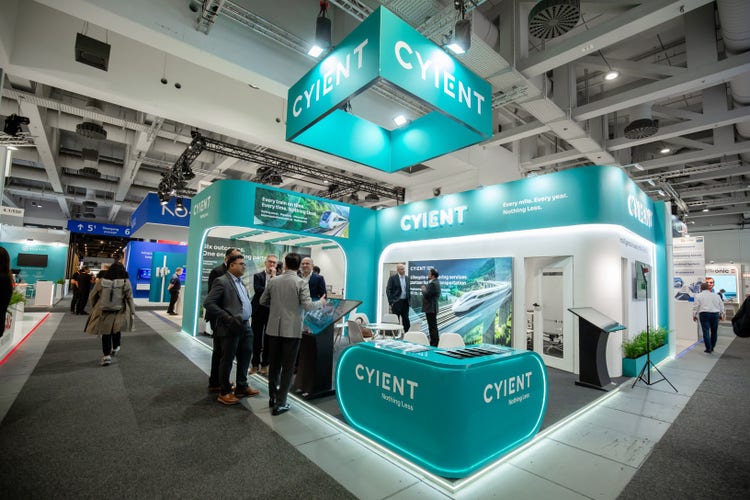
Cyient at InnoTrans 2026
Against this backdrop, Cyient’s participation felt especially relevant. Our conversations consistently centered on three connected lifecycle priorities.
| Engineering lifecycle Transforming product development through digital engineering, systems engineering, automation, model-based approaches, and AI-enabled decision support. |
Service lifecycle Enhancing maintenance, asset intelligence, predictive operations, diagnostics, smart MRO, and service excellence. |
Factory & SCM lifecycle Improving compliance, traceability, process efficiency, supplier quality, and right-first-time execution. |
These themes resonated because they reflect the challenges many rail organizations face today. Customers are seeking partners who can connect the entire lifecycle, from design and engineering through manufacturing, operation, maintenance, and continuous improvement.[
“The future of rail will not be built by technology alone. It will be built by partnerships, collaboration, and a shared commitment to innovation.”
The most memorable conversations
One of the greatest strengths of InnoTrans has always been the conversations. Not the presentations. Not the booths. Not even the technology demonstrations. The conversations.
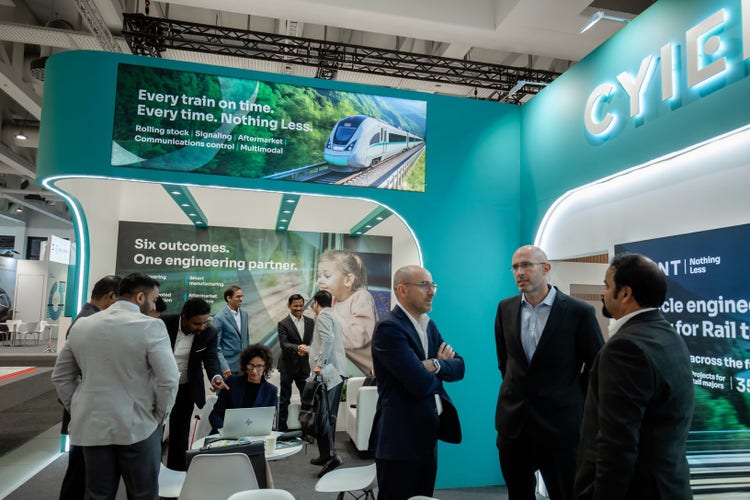
Throughout the four days, we met with rail OEMs, operators, suppliers, infrastructure organizations, and technology leaders from different regions. While each discussion was unique, common priorities emerged: faster program delivery, workforce transformation, increasing complexity, greater regulatory scrutiny, asset reliability, sustainability, and digital transformation.
What varied was not the challenge, but the approach. That exchange of perspectives is what makes InnoTrans invaluable. Every meeting becomes an opportunity to learn, every discussion reveals a new way of thinking, and every customer interaction offers insight into where the industry is heading next.
Innovation on display
One of the defining features of InnoTrans remains the outdoor track display. Seeing full-scale rolling stock, advanced train technologies, and next-generation mobility concepts in a real-world environment is an experience unlike any other industry event.
This year’s focus on AI-enabled mobility, digital operations, sustainability, and intelligent infrastructure highlighted how rapidly the industry is evolving. The future of rail is no longer a distant vision. It is being built today.
Beyond technology: the human element
Perhaps the most important takeaway from InnoTrans 2026 was not technological. It was human.
Technology can enable transformation, but transformation itself is driven by people: the engineers solving complex challenges, the operators keeping networks running, the maintenance teams ensuring reliability, the innovators imagining new possibilities, and the customers willing to embrace change.
Over four days, I was reminded repeatedly that the rail industry has always been a community built on collaboration. Innovation rarely happens in isolation. It happens when organizations come together to share ideas, challenge perspectives, and work toward common outcomes.
Looking ahead
As I left Berlin and reflected on the week, one thought stayed with me. Thirty years ago, InnoTrans began as a platform for showcasing transportation technology. Today, it stands as a global forum for shaping the future of mobility itself.
The industry faces significant challenges, but it also has unprecedented opportunities. Artificial intelligence, digital engineering, connected operations, and lifecycle intelligence are opening possibilities that were difficult to imagine only a few years ago.
At Cyient, we are proud to be part of that journey. Our commitment remains focused on helping customers transform their engineering lifecycle, aftermarket lifecycle, and quality lifecycle while delivering meaningful business outcomes.
After four inspiring days in Berlin, I am more optimistic than ever about what lies ahead. See you at the next InnoTrans.